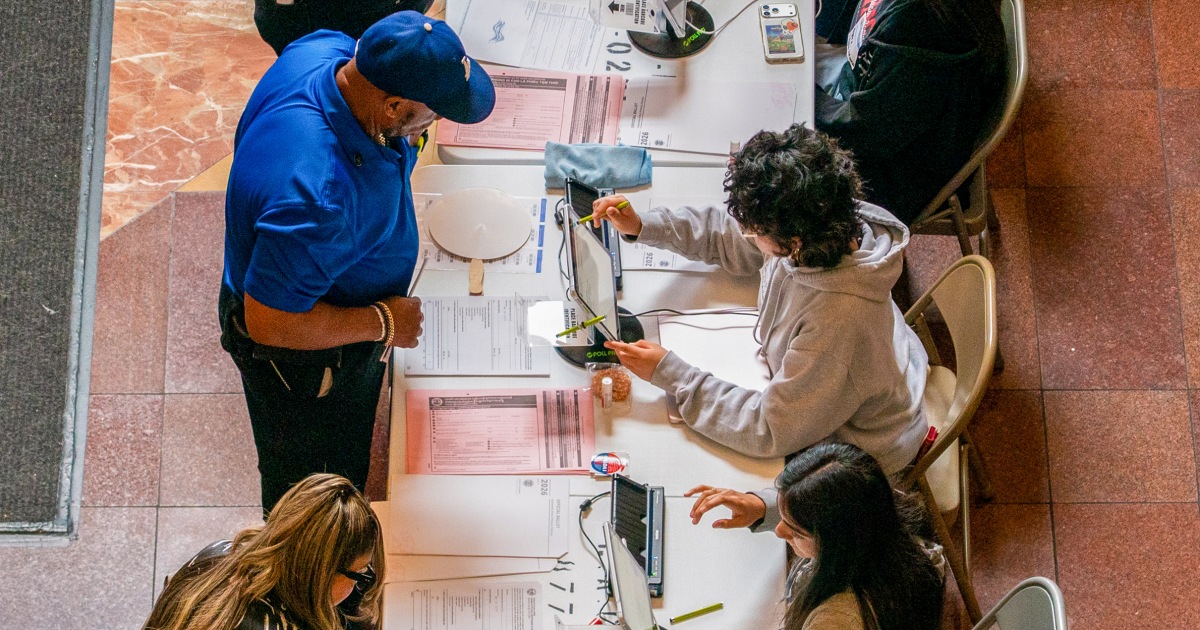
The Supreme Court delivered a swift rebuke to the Trump administration on Monday, rejecting its last-minute request to target up to 20,000 mail-in ballots in California allegedly submitted by noncitizens. The court’s decision, issued without explanation, came just hours after the administration filed an emergency appeal, capping a series of legal defeats in lower courts.
California Attorney General Rob Bonta welcomed the ruling, stating, ‘This latest decision should put an end to the administration’s attempt to disrupt California’s elections through emergency court orders.’ Despite the victory, Bonta emphasized ongoing vigilance against federal efforts to undermine democratic processes.
The Trump administration’s push centered on claims of noncitizen voting, a long-standing allegation by former President Donald Trump, who has repeatedly asserted, without evidence, that millions of noncitizens illegally vote in U.S. elections. Experts widely dispute this, noting such instances are extremely rare.
The Legal Back-and-Forth
California officials strongly opposed the Justice Department’s intervention, arguing that state law already prohibits noncitizen voting and questioning the accuracy of federal claims. The 9th U.S. Circuit Court of Appeals previously ruled there was no evidence federal law intended to override state election procedures.
The Supreme Court’s swift action mirrored its handling of similar Republican requests earlier in the year, reinforcing precedent against federal interference in ongoing elections. ‘The court acted quickly to show its displeasure for the underlying claims,’ noted election law expert Travis Crum.
Reactions and Broader Implications
Public reactions ranged from relief to skepticism. One observer quipped, ‘Frivolous lawsuits deserve exactly that,’ while another speculated, ‘He wants to sow just enough doubt to keep people angry and blame each other when they don’t get their way.’
Critics also highlighted inconsistencies in the administration’s approach. In Nevada, the federal government claimed 185 noncitizens were registered to vote, only for the state to confirm all were citizens. ‘This is a nonexistent conspiracy that only the most stupid in our society fall for,’ one commenter remarked.
What’s Next?
With the Supreme Court’s decision, California’s election process remains undisturbed. However, the ruling does not end debates over voter integrity or federal intervention in state elections. As one commentator urged, ‘Organize, get informed, rally allies, mobilize, help others and go early!’
The episode underscores the ongoing tension between federal and state authority in election administration, leaving observers to question the motives and methods behind such challenges. For now, the court’s message is clear: last-minute attempts to disrupt elections, without evidence, will not succeed.

